Monday, April 16, 2012

Final Assignment

       During the course of this class I was able to gain seek to learn by using the classes' learning objectives.
To consume information I was able to examine many different ways of gathering information. I was given some good books that were assigned for me relating to the 18th century and for openness. The sound unbound was an interesting take on how music is spreading and how remixing happens. It was quite hard to follow because it doesn't have one main tenant that it is attempting to prove so I wasn't really able to gain much from the book. It did come with an interesting music CD though with some odd but intriguing music.

       To meet the course objective for consuming information I used lots of different sources. Mainly I looked at things that were online but for much of the information on Copernicus I gathered my information from what I have learned in my astronomy class and my physical science classes that I took here at BYU in the past. I also looked at information online about how different traditions came about. When my grandmother passed away this semester I wondered how modern funerals had come about so I began researching information about how modern funerals came about. I did this mainly through google searches but I specifically was looking for educational site and organizations that were not .com sites cause many of these types of sites seem to have a better understanding of the information that I was looking for.

       One of my favorite blogs was about fair use I went to the governments own site to see what copy right laws actually are. I found it interesting that much of our fair use law hasn't changed in over 50 years. It kind of made me wonder if we needed to adjust the current system because there has been such a large change in how information is presented in the last 50 years. It was really interesting to get to gather information from lots of different sources because some of the information is so biased that looking at the opinions of fair use was a challenge to not just read someone's article and immediately adopt their position because it sounded good.
       Coming up with an idea of what to research was the hardest part most of the time in the creation process. Sometime there were videos that really helped to get a good solid understanding of a topic, like TEDx. Other times content was not as well presented like looking at videos from youtube in an attempt to find some information to make my blog have something catchy to attempt to draw others attention.


       Because of this class and being assigned the topic of openness at the start of the semester I was able to chat candidly with my cousin who is a computer buff about the topic of how SOPA would affect media and internet if the legislation was passed. This was only possible because of class interactions and being able to comment back and forth with people on google+ (I can't figure out how to link to google+ comments).

       By the end of the class it had become much easier to more easily direct what I wanted to learn about. It was extremely nice to be able to have a group that could be given assignments and actually not have to worry about them being accomplish and not seeing anyone person having to take on an extra hard load because of someone not wanting to take the initiative and take on tasks that were little out of their comfort zones. 

       From Digital Civilizations I was able to learn a new way of connecting and learning from others. It is extremely simple to get connected with a Professional in just about any field that I could want to learn about.  Learning platforms come in many different forms and I was able to see that there is not just one set way to learn about a subject. Information can be gathered extremely easily from outsiders and experts are always somewhere close by to help with starting to learn about a new subject. 

Thank You Professor Burton and Zappala 

Friday, April 13, 2012

Presentation Invites

For the asking of people to the presentation I did what the Professors mentioned for us to do which was look at the people we know and have been getting in contact with and ask them to watch our performance. I asked eight people to watch the performance online cause most of the people I felt would find our class applicable were people who do not live here in Provo.
I asked Jesse Spackman, Brian Pincock, Aaron Dietrich, Jeff Hoffman, Sid Smith, Tyler Dodge, Lainey Thompson, Richard Howard. Jesse and Brian are engineers and they are both involved in the current science movement so I told them that I thought this would be beneficial for them because they would be able to see some changes that could be made in science to improve how science is relayed.
I asked three people in person with the fliers to the performance so that they would remember the performance. Unfortunately only one of the people was able to make it that evening but at least someone was able to make it to see our classes awesome performance. In person I asked Rebecca Plante (who attended), Kevin Walton, and Brady Hirst. Rebecca is a teaching major so this was super beneficial for her to be able to see some of our ideas for how to improve teaching. New teachers are the people who will probably be able to change how the education process is happening.
I thought that the presentation went really well and found the all of the different groups performances extremely well done.(even with the couple mistakes technical mistakes)

Sunday, March 25, 2012

Higgs Bison Particle

Following up a bit on my Antoine Lavoisier I thought about what we know about the particles in a cell. Originally people believed that if you took a log and cut it in half you would still have even if you continued to cut the log infinitely. We now know that this is not correct but after you cut a board long enough you will reach a point where you will see the basic building block of life the cell.

A cell is not even the smallest part that you get a cell is made up of electrons, protons, and neutrons. Quarks then are what make up electrons, protons, and neutrons. Which is made up of even smaller particles.

These different particles could not be found until there were advances in technology. Through technology new theories are able to be verified. Currently there is a theory about a particle being called the Higgs Bison particle. This theory was developed in 1964 but because of technological shortcoming his theory couldn't be proven at that time. Today with the aid of particle accelerators scientist are thinking that they may be able to prove the existence of the Higgs particle in the coming months.

Here is a quote from Time Magizine,
"Working from Higgs' theory, scientists postulate that initially weightless particles move through a ubiquitous quantum field, known as a Higgs field, like a pearl necklace through a jar of honey. Some particles, such as photons — weightless carriers of light — can cut through the sticky Higgs field without picking up mass. Others get bogged down and become heavy; that is the process that creates tangible matter."

Read more: http://www.time.com/time/health/article/0,8599,1729139,00.html#ixzz1qCAT43To


Through technological advances much of the scientific gap can be closed.

Phobia:
a persistent, irrational fear of a specific objectactivity, orsituation that leads to a compelling desire to avoid it.
A phobia is defined as an irrational, intense fear of an object or situation that poses little or no actual danger
I took my little sister to the doctor this week and she had to get her ears checked out.  She is exceptionally afraid of having things near or in her ears.  She doesn't fall under the scientific definition of a phobia, however she would under the typical view of society.  Phobia is a term often overused to define regular fears.  People use the word to describe regular fears like the fear of spiders or bugs.  
Phobias are only considered such if they get in the way of normal functioning and everyday life. However, fear in the traditional sense is a normal part of life.  

Thursday, March 22, 2012

Annotated Bibliography


Smithsonian.com, Copernicus Unearthed, Smithsonian Magazine, 2006 Here they address a lot about how Copernicus was the first person to be able demonstrate that the earth orbited the sun and not the other way around. It also shows that even when you are the person who comes up with a great new concept you will not always be accepted for it.[Internet]

Ludwig Heinrich Heydenrich, Leonardo da Vinci, Encyclopedia Britannica, 2012 This covers the whole life and the scientific works of da Vinci. He was a man who didn't have formal training is science but was able to come up with detailed scientific research because he was one of the first people to document and use the scientific method.[Internet]

Peter Saundry, Lavoisier Antoine-Laurent, The Encyclopedia of Earth, 2010 Peter Saundry talks about the life of Lavoisier and how his work was influential in changing how the world views science. Didn't work within the current scientific system because he didn't go to the typical schooling of scientists at his time period. [Internet]


Nielsen, Michael. Reinventing Discovery, Princeton University Press, 2011 Michael talks about how science has had the ability to now have people work on something and have rapid contact by other people to help in the development and vetting of new ideas. He uses examples of things like how the human genetic map was compiled by many different people.[Professor Burton]

Beretta, Marco. Lavoisier in Perspective, Wolf & Sohn, 2005 Lavoisier in Perspective speaks about how Lavoisier was a man who was able to introduce revolutionary changes in chemistry. Lavoisier was able to help make many changes in the science world through his ability to look at work of others and connect their work together to become something coherent that actually made sense.[Library]

Guerlac, Henry. Lavoisier-The Crucial Year. Cornell University Press. 1961 Henry makes note of how we don't really know all that much about the time when Lavoisier switched from his early research to his research on combustion. This switch of his is what let him to understanding that matter is conserved in a reaction and has the same mass at the end of a reaction.[Library]


Sunday, March 18, 2012

Center of the Universe

For the longest time people believed that the earth had to be the center of the Universe and that all the stars, the moon, and the sun revolved around the earth. This is what I call a self centered problem, first the world is flat and then the center of the universe, seems like we have to feel like we are important.
There is a man who's name was Copernicus, he is the man who helped us move away from this problem of not understanding where the earth is placed in reference to the rest of the Galaxy. Copernicus had studied the work of astronomers in the past and from these things he posed the theory that the earth was not what everything revolved around. He believed that the sun was the center and that the earth and all of the other planets revolved around the sun. 


It turns out he was correct. Copernicus was not a man though that wanted to shake up the system if he was not absolutely sure he was correct. He could have published his finding early on in his career but he didn't want to be proven wrong. Copernicus was a scientist who went more of the traditional root that we think of for science today he went to university and studied about arithmetic, geometry, geometric optics, cosmography, and  theoretical and computational astronomy.


Copernicus's theory was called Heliocentrism. According to Heliocentrism the earth moves; that the sun occupies the lowest, and thus the central, place in the universe. Through study Copernicus was able to learn from past experts in his field and expound and add to the theories that were being developed.


Sunday, March 11, 2012

Antoine Lavoisier

Have you ever heard of this man? When you think of chemistry he is probably not the first thing to come to mind but Antoine is one of the people that made real change happen is the field of chemistry.

Antoine was a man who didn't have any formal training is science. In fact he went to school to become a lawyer. This was his parents wish but after he was done with his schooling he never did practice law. Instead Antoine devoted his efforts to science.

What was his greatest discovery and theory, the conservation of mass is basically what his theory was. Antoine believed that if you contained a reaction all parts of the chemical reaction and weighed the inputs and the out puts that the products of the reaction would weigh the same. While Antoine wasn't the person who first came up with this idea he was the man who figured out how to make it so that other people could understand the process and information and was able to show that discoveries were true thank to doing studies over again. This show that to create real change you do not necessarily need to come up with amazing new ideas but you do have to spend the time to check the findings of others and then explain the concepts in greater detail to truly make a difference in the world.

Da Vinci science and art.


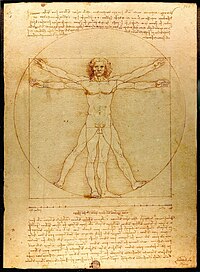
The Vitruvian Man one of Leonardo Da Vinci's most famous works just shows how through art science can be advanced. Leonardo didn't have formal training as a scientist, but contrary to the scientists of his time, Leonardo was one of the first scientists to use the basic scientific method that we see today. He would observe some action and question how is was being accomplished and would then spend time and observe the action in process and he managed to develop many sound theories because of this. For the Vitruvian Man Leonardo spent hour on hours observing hoe the human body moved and was able to draw an accurate portrait of how the human muscles work. 

One thing Leonardo did that really connected his work to the future was he kept diaries and in these all of his observations and work are contained. 


The most difficult part for understanding Leonardo's work is that he wrote his journals in mirror handwriting. What this means is that to read his journals you need to be able to either read backwards or get a mirror and read his writing by looking at it through a mirror. Da Vinci's work has really captured people's attention in the modern day because many of his invention designs are actually plausible. He didn't include everything that would be needed for the machines to work but the designs are sound otherwise. This has let many people to make his inventions because we now that the technology and materials to make his inventions plausible. Just think Da Vinci was a scientist without formal training in science but through observing his surroundings he was able to come up with many amazing inventions.

Sunday, March 4, 2012

Comparing the Depression to the Recession


"The main causes of both crises lie in actions of the federal government. In the case of the Great Depression, the Federal Reserve, after keeping interest rates artificially low in the 1920s, raised interest rates in 1929 to halt the resulting boom. That helped choke off investment. Also, President Hoover signed into law the sky-high Smoot-Hawley Tariff, which stifled trade and damaged American exports throughout the 1930s. Finally, the President signed a large tax increase into law in 1932, which halted entrepreneurship.
The seeds of the Great Recession were planted when the government in the 1990s began pushing homeownership, even for uncreditworthy people, with a vengeance. Mortgage-backed securities built on dubious mortgage loans became “toxic” when the housing market took a downturn, and many American banks verged on collapse. The government’s urgent desire to bail out various banks and corporations created uncertainty and instability, and this may have widened the recession."
During the Great Depression the unemployment rate was extremely high up to 25 percent of all workers were out of work. While on the other hand during the Great Recession the unemployment rate got up to 10.1 percent. While this is extremely high it is nothing compared to the Great Depression. 

Tuesday, February 28, 2012

Reflection

While looking at my blogs I noticed that my focus seemed to be about innovation and openness. Making it so that new things are thought up and as these new things come into being they are in allowed for the public to use them. Innovation and openness seem to be a great thing that managed to move things forward quickly.

Sunday, February 26, 2012

Problems With Mediums

There are many draw backs  to the different mediums as they have developed. Print, one of the oldest mediums that we still see a lot of today, is heavy and required huge machines to accomplish the printing of the works of literature. Print was an amazing invention, don't get me wrong, but print was able to help spread the ability to read from just select groups to many many people. By having the ability to read and collaborate because of the availability of the medium really help to spread literacy.

The medium that we see a ton of today is the spread of many new things in digital mediums. Just think about it all of the blogs and e-books and all of the knowledge that is being spread because of the easiness of access to information about basically any subject that perks you interest. There are many draw backs to today's mediums though as soon as we learn about all of the new things some other new twist on the medium comes out. Look at how even social media keeps changing, Myspace and then Facebook. Now google is even attempting to move into the social media market with google plus. As everything is becoming connected this can be problematic because if one aspect of your account is hacked then the hacker has access to all of your information that is linked together.

Weapon's Builders With Good Intentions

The Gatling gun was made by a man who guess what his last name was Gatling. Dr. Richard J. Gatling invented the Gatling gun which was basically the precursor to modern day machine guns. Dr. Gatling had good intentions when he invented the Gatling gun, he wanted to make it so that not as many people were required for an army to produce the same amount of fire power. With smaller armies Dr. Gatling hoped that there would be less causalities and hoped that he would help people to realize how futile war is.


Alfred Nobel the founder of the Nobel Prize made the money that perpetuates the Nobel prize by inventing something that if used for his desired purpose was extremely useful, dynamite. On the other hand though there are many times that his invention was not used for its desired purpose and instead was used as part of a weapon during war time. Nobel did not like this he invented it to be safer than its predecessor nitroglycerin and it was but it also allowed people to use dynamite as a weapon to cause massive destruction. Nobel didn't want to be remembered as the man who invented dynamite and so he set up the nobel prize to help people who were trying to do good in the world

Some people might not deem this a good intention but protecting you homeland from an invasion was Mikhael Timofeevitch Kalashnikov reason for inventing the weapon that killed the most people of any weapon, the AK-47. Kalashnikov was a tank mechanic who while he was in the hospital came up with the idea and basic design for a weapon that could out perform German machine guns that were killing tons of his country men. He knew that this weapon needed to be able to fire in any condition. Hot, cold, mud, or sand the AK-47 needed to fire. He achieved this but in the end his invention became the weapon of guerrilla resistance. This weapon has killed more people to date than the atomic bombs have. 


Sunday, February 19, 2012

Versioning

I was wondering why my game that I play is always having to shut down and release a new "patch" and why some of the time the new patch didn't seem to work as well as a past one for a day. What I found out is that League of Legends is just like most other game that have users playing against each other via the internet, to keep their users interested they have to continually be making changed to their game and technically making a new edge to the game all of the time. This I learned from our class website has an actual name versioning.

Why is releasing software often even when there could potentially be problems the best idea for companies? The reason is that as companies release their software and get it out for users to see the "bugs" or problems will be found out that much faster when there are thousands of people using the software rather then just your few test junkies that are working for the company.

This seems to be the opinion of every company today. They release often and are always looking for feedback.  It can be hard to tell if companies are actually looking at the feedback that they are sent but just think about it if, as per say, you were a software company and were receiving tons of feedback on your product from people that were actually using it wouldn't that just make you super excited because you would know that your idea was actually having the chance to take off.

Sunday, February 12, 2012

Funerals

So all this week I was preoccupied because my grandma suddenly became I'll and died. So when thinking about what I wanted to do some research on the only thing that came to mind was where some of our funeral traditions came from.
Modern Burials where people were placed in a coffin after they died didn't happen in the United States until the English began to immigrate to North America. Previous to the English in the 18th century when people were buried they were just wrapped in so sort of cloth and buried.
Originally people were buried in church yards but this began to be stopped when the Puritans wanted to rebel against the established custom and instead had their town set apart grounds for common burial grounds. These were areas that basically were zoned for only being a burial spot. 

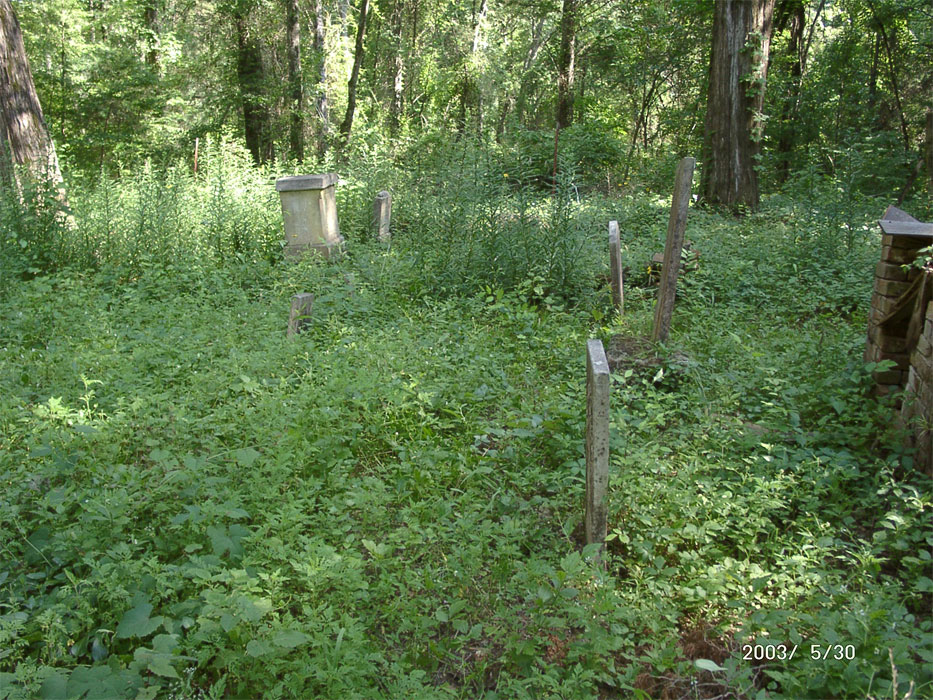
When people moved away from living near towns they started going away from getting buried in town to starting family burial plots. Family's wouldn't be able to afford or want to send their family members away from the family farm and so they would just bury them on their property. Wouldn't it be nice to be allowed to be buried on some place that is familiar to you rather than being buried a long way from your family where it would become tough for them to come visit your head stone.

Burial places have a reverence about them that just help me want to be respectful I once got to go visit Arlington Cemetery and it just made me feel grateful for all of those men who were willing to give up their lives for the cause of freedom. Many people serve their country and do their best to protect their family's. This is why graves have such reverence. 
Here is a video of the changing of the guard at the Tomb of the Unknown Soldier
This just shows my feelings on how much funeral and knowing where your family is means to me. I would hate not knowing what happened to a family member who went away to war to defend my freedoms.

Tuesday, January 31, 2012

Flaws in the System

YouTube and other sites like it have an interesting law that they have to deal with, DMCA, which is the Digital Millennium Copyright Act of 1998. This Act give service providers like YouTube protection from copyright infringement liability insofar as they meet specific requirements. One of the largest points for these type of providers is that they have to implement a "notice-and-takedown" system. The requirement that goes along with the "notice-and-takedown" system is that repeat infringers accounts must be canceled.

Congress granted online service providers (like YouTube) certain protections from copyright infringement liability, so long as they meet certain requirements. One requirement of this "DMCA safe harbor" is that online service providers must implement a "notice-and-takedown" system. Another requirement is that YouTube must cancel the accounts of "repeat infringers. 

Here is a video about fair use and at about 15 min 30 sec in there is a really interesting point that is made by Lawrence Lessig: it is called Re-examination of the Remix. 

Think about it when we use the internet there are rules that are there that we don't even know about. How would you like to be treated like an elementary student having to copy something so that your video can be posted and not taken down. The internet is such useful service but there are many aspects about it that cause problems for users. There are whole processes that are required 

Saturday, January 28, 2012

Fair Use

Fair Use is something that even the government doesn't have a firm stance on. On their own website it says,"The distinction between fair use and infringement may be unclear and not easily defined. There is no specific number of words, lines, or notes that may safely be taken without permission..."


From the government's own website it leads me to believe that there hasn't been a significant updated to Fair Use laws in quite a while. They have this excerpt which amusingly enough is from the Report of the Register of Copyrights on the general Revision of the U.S. Copyright circa 1961. 


"quotation of excerpts in a review or criticism for purposes of illustration or comment; quotation of short passages in a scholarly or technical work, for illustration or clarification of the author’s observations; use in a parody of some of the content of the work parodied; summary of an address or article, with brief quotations, in a news report; reproduction by a library of a portion of a work to replace part of a damaged copy; reproduction by a teacher or student of a small part of a work to illustrate a lesson; reproduction of a work in legislative or judicial proceedings or reports; incidental and fortuitous reproduction, in a newsreel or broadcast, of a work located in the scene of an event being reported.”


If this is the point where Fair Use really started from it really just makes me question about the copy right law/fair use and how it is evolving. 


This is a long video but it really does explain a lot about where fair us is a today and give a good representation of both sides of the argument. 

Thursday, January 26, 2012

Civilized People

"Stop. Think about it. Every sensation you have comes from one source: civilization....  What can you see, hear smell, taste that does not originate in or is not mediated by civilized people? Crickets chirping on a Sounds of Environment CD doesn't count."(The Sound Unbound)

Every day as we go about our live we are surrounded by things that have been created by the Civilized people. While great advancements have come by these civilized people at the same time much has come to fill in the open areas of our thinking. No longer can we just sit by and have quiet unless we choose to find the time to step back from the world and think. Even the Pope Benedict XVI has spoken on how silence is becoming a rare occurence. Noise has begun to fill in the spaces where before we had openness; places to think and places to learn for ourselves. 

"There's a famous story about the artist Marcel Duchamp. No one knows if it's really true, but that's how stories work. Some time over a period of years in the mid-twentieth century, he decided to stop painting, saying he stopped simply because he had started to just. "fill things in..." This is what's going on now"(The Sound Unbound) {This is an example of Duchamp's work}

If we allow ourselves to get so involved in the noise of the internet because we can perpetually be learning useful or useless information, we will lose the openness where all of the great discoveries are made. It is not through learning random facts or hearing about your favorite basketball player's life that we can truly learn. So STOP STEP BACK AND ENJOY THE SILENCE EVERY ONCE IN A WHILE!

Thursday, January 19, 2012

Start of the Constitution

The United States constitution almost didn't have the chance to be formed. General George Washington had been asked to come to a convention to help Amend the Articles of Confederation. Washington didn't feel that this convention was go to be able to succeed and even worse wouldn't be able to make meaningful changes. One state went so far as to not even send any representatives to the convention. Rhode Island felt that the convention was going to attempt to do away with the Articles of Confederation (technically they were correct) and this to them was unacceptable. Many of these states and people who were opposed to the convention wanted to keep the state governments strong and have a weak national government.

Luckily for US (ha ha that can be a pun) General Washington came and was willing to preside over the processions, because of this the convention became illegitimate and was able to come up with a binding constitution. Although its not like it was something super easy to do. Many people devoted hundreds and hundreds of hours to accomplish this task.

(side note on this photo the version that we see is modified the original has one person's foot getting stepped on)

Thursday, January 12, 2012

The Test Post

So I am posting to see if my circle group of the 18th century B can see my bloggs.

Tuesday, January 10, 2012

How Big is the Sky

  My name is Montana Thompson. I am from Preston, Idaho; which incidentally enough is the place where Napoleon Dynamite was filmed. I hope you enjoy this video.
 I served a mission in Calgary, Alberta. I recently got engaged to Rebecca Plante. I asked her to marry me over the Christmas break. I am currently attempting to become a business major and I hope that this class will be a great opportunity to learn about the last three or four centuries.
  I have been assigned to the topics of the 18th century and Openness. I don't know a ton about either of the topic so I am in for a treat because I will get the chance to research and learn about all sorts of information that will be new to me. From what I've read on openness there seem to be a lot of debate about how open things need to be I haven't had enough time to actually get my opinion on the matter but it definitely is something that I will be looking into a lot in the coming semester.
In the 18th century there were many new inventions that greatly helped the world to advance. One example of this is the sextant which allowed the user to determine the latitude that they were at. Unfortunately it didn't measure the longitude. As with every problem though someone else took the challenge and figured out how to measure longitude. His name was John Harrison. Without these inventions much of the colonization that happened around the world would not have happened cause sailors would not have been able to navigate properly. Through hard work of people before me I get the chance to enjoy my life with many amenities that otherwise would not exist because of the advancement of others and their wonderful ideas.